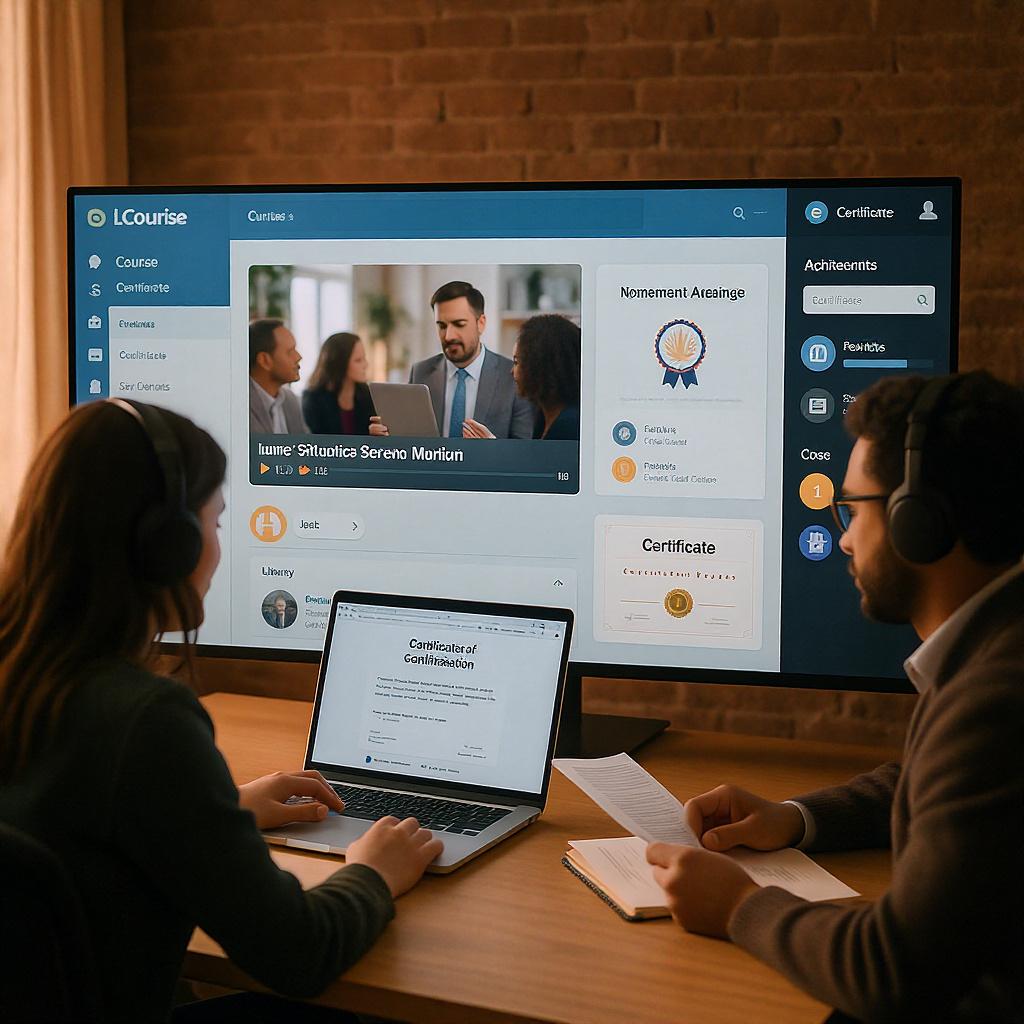
Remember the last time your team had to attend a training session that felt like a lecture from the 90s? Everyone trying to stay awake, half-filled notebooks, and a sense that the knowledge would evaporate by the next week? That’s where a modern Learning Management System (LMS) comes in—turning traditional training into interactive, trackable, and enjoyable learning experiences.
Why Small Businesses Love LMS
Small businesses often face limited budgets, smaller teams, and the challenge of upskilling employees quickly. An LMS can help by:
- Delivering structured training modules online
- Tracking progress and performance without manual paperwork
- Allowing employees to learn at their own pace
- Reducing travel and logistics costs for training
For a small startup with a team of five, LMS platforms can centralize all training content, from compliance tutorials to software onboarding. Employees feel empowered and motivated because they can learn when it suits them, without feeling micromanaged.
Scaling Up with Enterprises
Large companies face different challenges: thousands of employees, multiple locations, and ever-changing compliance requirements. LMS solutions for enterprises provide:
- Multi-department content management and role based access
- Advanced analytics on training completion, skill gaps, and certifications
- Integration with HR, performance, and payroll systems
This allows HR and learning managers to ensure that everyone, from the intern in Boston to the manager in Berlin, receives consistent training without juggling dozens of spreadsheets or emails.
Interactive and Engaging Learning
Gone are the days of boring slide decks. Modern LMS platforms include:
- Quizzes, assessments, and gamification to keep learners engaged
- Video, audio, and interactive content for diverse learning styles
- Forums and discussion boards to foster collaboration and peer learning
This combination makes learning feel less like a chore and more like an opportunity. Employees retain knowledge better, apply skills faster, and feel more connected to the company’s goals.
Flexibility and Accessibility
LMS platforms allow employees to access training from anywhere. Whether someone works remotely, travels frequently, or has family commitments, learning doesn’t stop. This flexibility reduces stress, improves morale, and supports a culture of continuous improvement.
Imagine a manager in a different time zone accessing the same course as a new hire. Both can progress at their own pace, and managers can track participation without chasing anyone for updates.
Whether you’re running a boutique design studio or a multinational corporation, LMS platforms simplify training, save time, and empower teams to learn continuously. Your employees aren’t just checking boxes they’re building skills, confidence, and a sense of ownership in their work.
In today’s competitive business world, continuous learning isn’t optional. It’s essential. With the right LMS, you can transform training from a dreaded obligation into a powerful tool for growth, engagement, and innovation.